



What Are the Symptoms of Dry Eye?
Dry eye is one of the most common conditions eye doctors see — and one of the most misunderstood. Here's what's actually happening in your eyes, and how to recognize it early.
What Is Dry Eye?
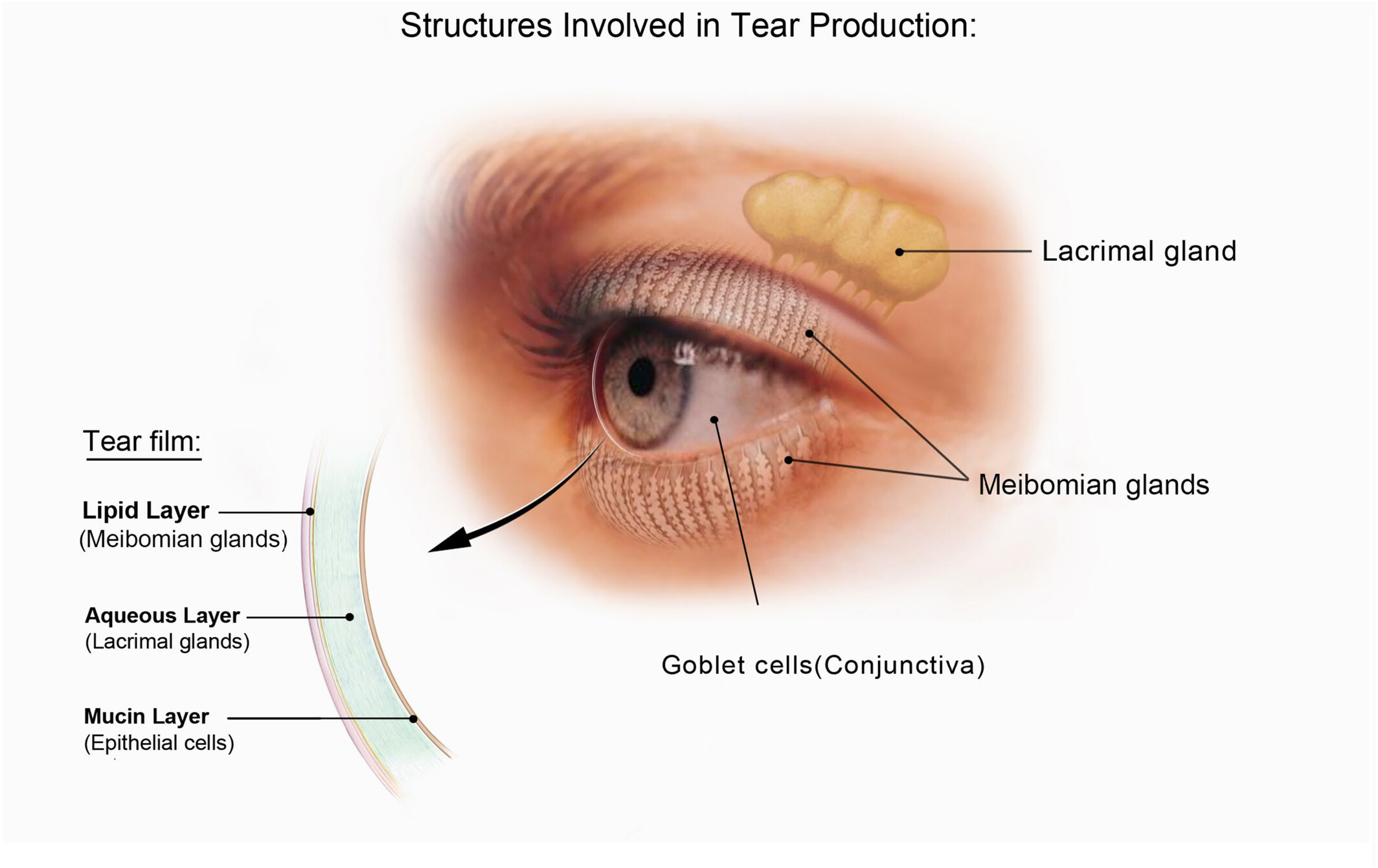
Dry eyes are caused by a variety of factors that disrupt a healthy tear film. Your tear film is made up of three layers — fatty oils, aqueous fluid, and mucus — that work together to keep the surface of your eyes lubricated, smooth, and clear.
For some people, this process doesn't provide enough lubrication, and dry eye develops. The tears produced can be inadequate for many reasons, but the end result is the same: tear instability that leads to inflammation and damage of the eye's surface.
The outermost, oily layer formed by the meibomian glands. It prevents tear overflow, slows evaporation, and lubricates the eyelids when you blink. Dysfunction here causes evaporative dry eye.
The middle layer and the bulk of the tear film, secreted by the lacrimal glands. When these glands don't secrete enough, dry eye follows.
The innermost and thinnest layer, made of goblet and epithelial cells. It allows the aqueous layer to adhere evenly to the cornea's surface.
Common Symptoms
Dry eye symptoms are often easy to notice once you know what to look for:
Two Types of Dry Eye
Not all dry eye is the same — the two main types are caused by different breakdowns in the tear film.
Tears evaporate too quickly, usually because the meibomian glands — the oil-producing glands of the eyelid — aren't working properly and can't slow tear evaporation the way they should.
The lacrimal glands don't produce enough of the watery, aqueous component of tears — the layer that makes up the bulk of the tear film.
- ✓ Use over-the-counter eye drops
- ✓ Take regular breaks during prolonged screen use
- ✓ Avoid exposure to smoke
- ✓ Use artificial tears regularly
- ✓ Practice conscious, full blinking
- ✓ Apply a warm compress to the eyes
Treatment Options at Pasadena Eye Center
Dry eye symptoms can be frustrating — but effective relief is possible. Our physicians will recommend a treatment that fits your needs, with options that target the root cause and promote healing.
- Preservative-free artificial tears and protective ointments
- Prescription eye drops to reduce inflammation and boost tear production
- Omega-3 or flaxseed oil supplements
- Eyelid hygiene recommendations
- Humidifier use and screen time management
- Newer contact lens materials for added comfort
- Punctal plugs to help retain natural tears
- MiBo ThermoFlo® – a gentle therapy that uses heat to unclog oil glands and improve tear film stability
Your treatment plan is always personalized for long-term relief and better eye health.
Next Steps
Dry eye can damage your eyes and impact daily life, but you can take steps to reduce your risk and discomfort.
You don't have to live with dry eyes. Let's treat the cause and not just the symptoms. Call and schedule an appointment today!
6950 Central Avenue, St. Petersburg, FL 33707 • 727-513-4016